
Written By: Justin Stolzenberg | Vice President, Argyle

When eligibility reviews double, mistakes multiply—and families pay the price. Redeterminations have always been a fact of life for government benefit programs. But the volume, frequency, and complexity of eligibility redeterminations have reached a new level, elevating risk for agencies and the people they serve.
States now face more frequent redetermination cycles, expanded work requirements that demand ongoing verification of hours worked, and heightened accuracy expectations tied to financial penalties. And all of this is happening while workforce capacity remains constrained.
For state agencies, the solution to managing this workload sustainably lies in automating one of the most labor-intensive aspects of redeterminations: income and employment verifications.
The Structural Shifts Driving the New Redetermination Reality
Recent federal policy changes have significantly increased the cadence and scope of eligibility reviews.
Redeterminations are happening more often.
States must now reassess Medicaid eligibility for expansion populations at least every six months instead of annually.
Work verification is now continuous.
For SNAP programs, agencies must verify that able-bodied adults without dependents are working, training, or volunteering for at least 80 hours monthly.
Errors now carry direct financial consequences.
States with payment error rates above 6% face tiered penalties ranging from 5% to 15% of total benefit costs.
The accuracy of redeterminations has never been more important. For a state distributing $2 billion annually in SNAP benefits, a 9% error rate could translate to more than $120 million in penalties. At the same time, these changes have not been matched with proportional increases in staffing or modernization funding—putting additional strain on already stretched teams.
How Manual Verifications Contribute to the Problem
In many cases, income and employment verifications are still handled manually. Staff request documents, applicants track down paystubs or bank statements, and submissions arrive through a mix of portals, mail, or fax.
For applicants with multiple jobs or gig income, assembling documentation can take days or weeks. During that time, applications sit in queues while staff track deadlines, send reminders, and follow up on missing information. If documents are incomplete or unclear, the process starts over.
When documents finally arrive, they must be reviewed for accuracy, completeness, and authenticity before a determination can be made. At scale, this creates significant operational strain—contributing to backlogs, burnout, and avoidable errors. And today, those errors come with real financial consequences.
How Consent-Based Automation Transforms Redetermination Workflows
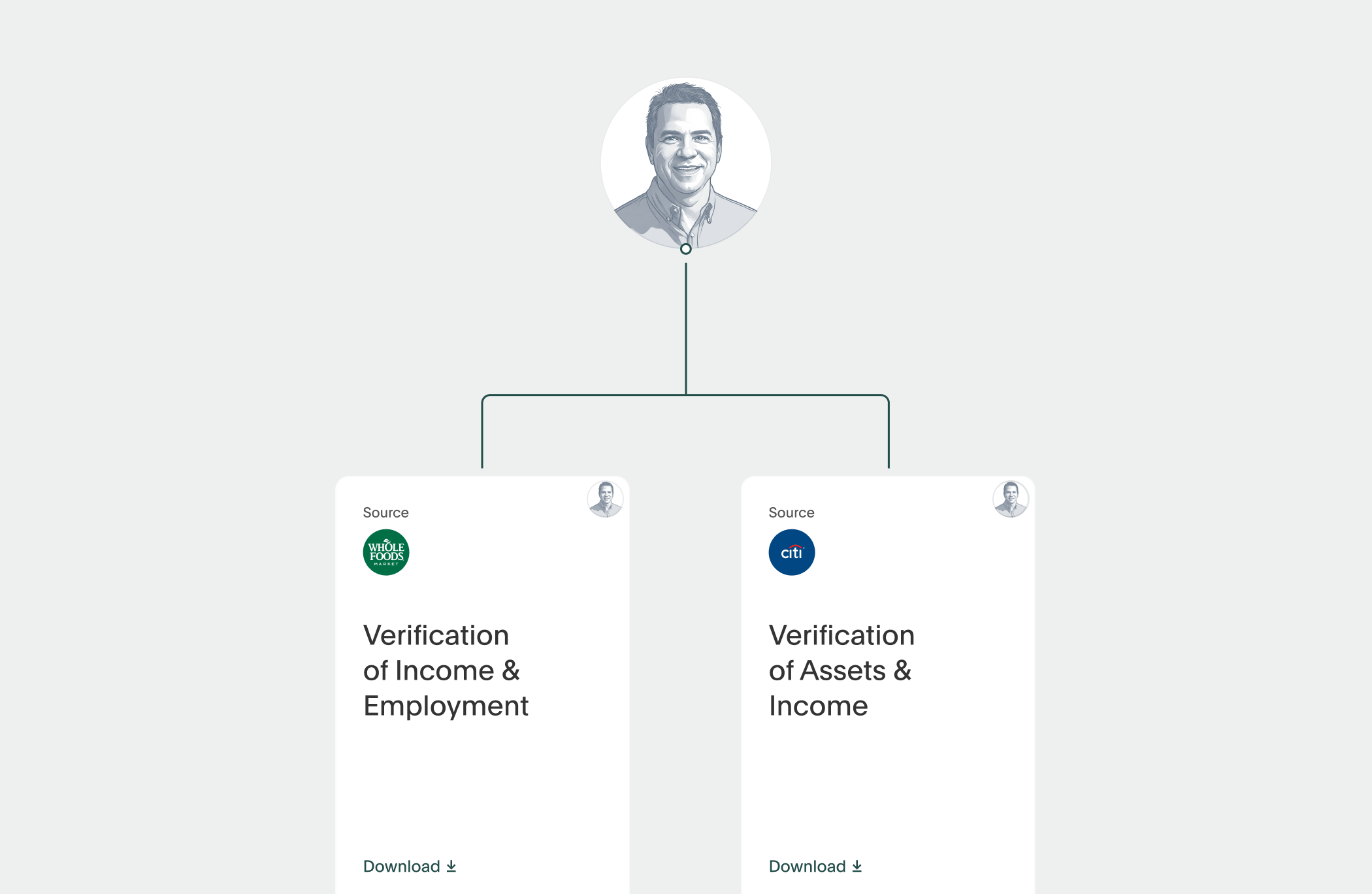
Consent-based verifications (CBVs) address the core challenges that make redeterminations so resource-intensive by eliminating manual document collection and review.
Rather than relying on uploaded documents, CBVs enable agencies to access payroll and financial data directly from the source—with applicant permission. This replaces paystub collection, employer outreach, and manual validation with real-time, structured data.
This isn’t just a faster version of a manual workflow—it’s a fundamentally different approach.
Faster processing times
With consent-based verification platforms like Argyle, automated verifications for redetermination can happen in minutes rather than weeks, helping to prevent procedural denials and reducing backlogged files. Instead of requesting documents and waiting for submission, agencies can use Argyle to send applicants a secure link. Applicants then follow the prompts to log in to their payroll or bank account and authorize data sharing with the agency’s eligibility system.
Because the data connection remains live (with ongoing consent), agencies don’t need to re-collect documents every six months. Updated income and employment information can be retrieved in seconds—without restarting the verification cycle. So while traditional, document-based verification requires reauthorization, resubmission, and re-review every time eligibility is reassessed, CBV removes that recurring friction.
It’s no wonder, then, that states that have implemented direct-source verification report quantifiable improvements in redetermination efficiency. On average, agencies see a 31.6% reduction in decision time from application to eligibility determination and a 66% reduction in days pending post-interview.
These aren’t marginal gains—they’re transformational changes that enable agencies to meet accelerated redetermination timelines without proportional increases in staffing. And critically, 93% of caseworkers find automated CBVs as easy or easier to use than legacy methods, meaning efficiency gains don’t come at the cost of more complex workflows.
Reducing staff burden
Automation doesn’t eliminate the need for caseworkers—it allows them to focus where they’re most needed.
By reducing time spent collecting and reviewing documents, staff can dedicate more attention to complex cases that require human judgment. The result is improved efficiency without sacrificing quality.
The Consent-Based Advantage
Consent-based models don’t just speed up individual verifications—they simplify how agencies manage ongoing eligibility workloads.
Instead of repeating a cycle of document requests, delays, and manual review, agencies gain access to:
- Real-time income and employment data
- Secure, permissioned access
- Automated data delivery into eligibility systems
- Ongoing updates without repeated document collection
For agencies navigating increased redetermination frequency and tighter compliance requirements, this shift represents more than incremental improvement—it’s a more sustainable operating model.
Enabling Modernization with a Flexible Solution
Fortunately, Argyle’s CBV platform is purpose-built for the operational realities of government benefits programs, including SNAP, Medicaid, TANF, and SSA. In February 2026, Argyle secured a long-term General Services Administration (GSA) Multiple Award Schedule contract that gives state and federal agencies a streamlined procurement path to its services
For agencies managing high-volume redetermination cycles, this makes it easier than ever to leverage Argyle’s key advantages:
Significant cost savings.
Argyle can reduce verification costs by up to 90% compared to legacy providers and manual processes.
A faster, simpler experience for applicants and staff.
Argyle’s integrated workflows reduce the steps required for both applicants and caseworkers. Applicants follow a simple, guided process to authorize data sharing, and caseworkers get standardized verification reports without manually collecting and reviewing documents. At redetermination, re-verifications are seamless — agencies can retrieve updated data without restarting the process from scratch.
Broad workforce coverage.
Argyle covers more than 90% of the U.S. workforce and connects to over 30 gig platforms, ensuring agencies can verify income and employment across the full range of applicants, including those hardest to verify through legacy methods, like gig workers.
Stronger fraud protection.
Argyle makes it significantly easier to detect fake paystubs and misreported income. For agencies under pressure to maintain error rates below federal penalty thresholds, this layer of protection helps reduce improper payments and the financial exposure that comes with them.
Argyle can be implemented through a customizable Application Programming Interface (API) for agencies that want to embed verifications directly into their eligibility systems, or through Argyle Console, a no-code tool that lets agencies launch verification requests via shareable URLs with no development work required. That flexibility means agencies can move quickly, regardless of their technical capacity.
The Cost of Inaction
The cost of maintaining manual verification workflows or relying on legacy solutions that weren’t designed for this workload is compounding:
- Redetermination backlogs grow as verification volume outpaces staff capacity.
- Procedural denials increase when applicants can’t submit documents fast enough.
- Those denials generate appeals that consume even more caseworker time.
- Higher error rates draw federal audit scrutiny and trigger escalating financial penalties.
- Staff burnout accelerates as the same workers are asked to do more with less, cycle after cycle.
- Eligible families lose coverage because of process failures, attracting political scrutiny that no agency wants to face.
None of these pressures are easing on their own, and agencies that delay modernization are absorbing growing risk with every cycle.
Looking Ahead
Redeterminations are no longer a temporary surge—they reflect a structural shift in how benefits programs operate. Agencies that modernize verification workflows now will be better positioned to manage ongoing eligibility demands sustainably. Contact Argyle to learn how direct-source, consent-based verifications support faster, more accurate eligibility reviews while reducing staff burden and preventing procedural denials.
About the Author

Justin Stolzenberg
Vice President, Argyle
Justin Stolzenberg is Vice President at Argyle, where he leads strategic initiatives supporting government agencies and their partners in modernizing eligibility and income verification processes. He works closely with the public sector to implement consent-based, direct-source income and employment verification solutions that improve program integrity, reduce administrative burden, and streamline access to benefits for eligible individuals and families.
With experience in business development and strategic partnerships across highly regulated industries, Justin focuses on helping agencies move away from legacy databases and manual, document-based verification workflows toward secure, real-time data connections. His work supports greater accuracy in eligibility determinations while strengthening privacy protections and advancing more equitable service delivery.
Through his leadership at Argyle, Justin helps drive the adoption of solutions that enable agencies to operate more efficiently at scale while maintaining trust, compliance, and transparency. His work reflects a broader commitment to leveraging technology to strengthen public programs and improve outcomes for the communities they serve.