
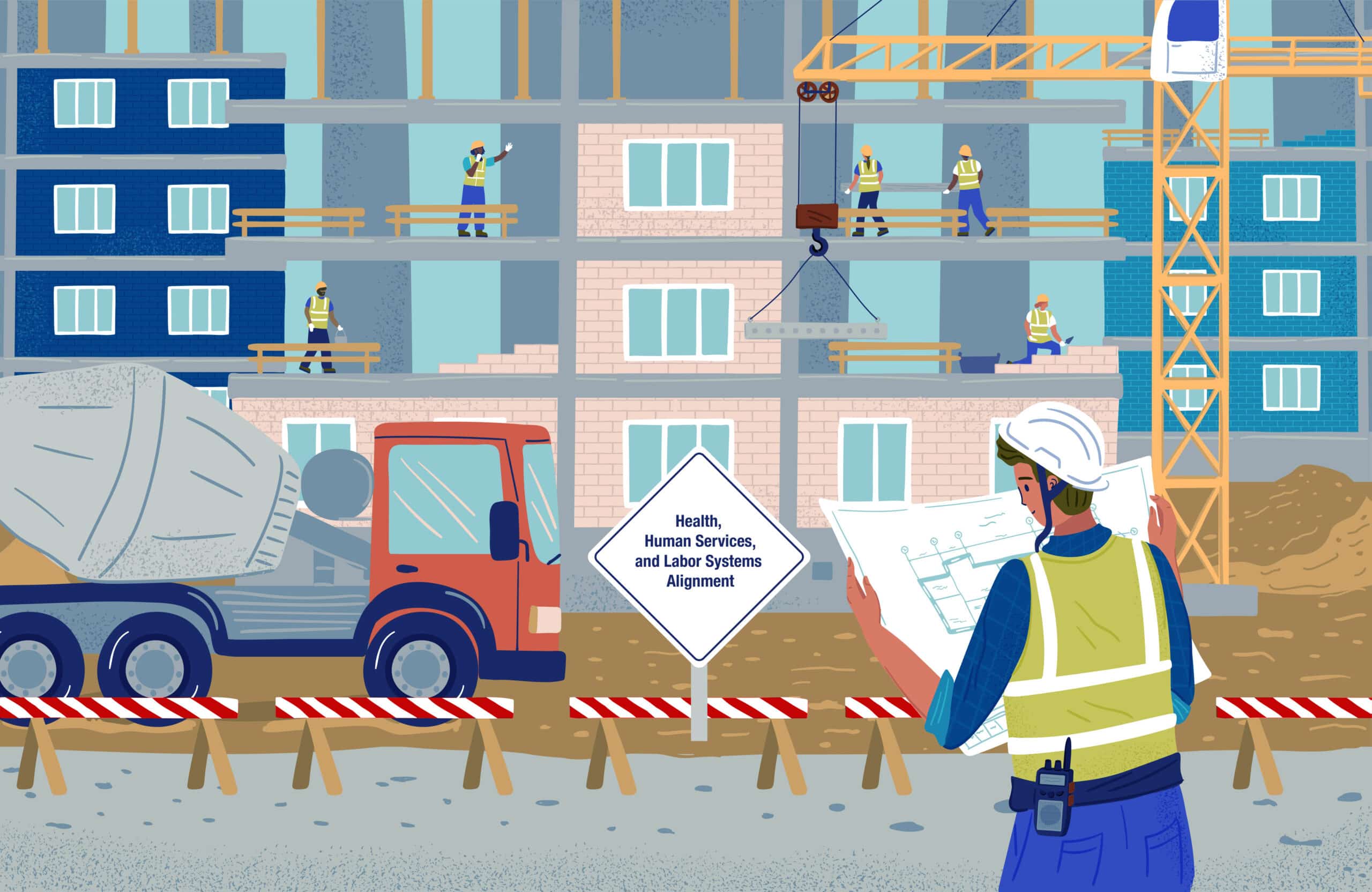
Aligned Customer-Centered Ecosystem of Services & Supports (ACCESS)
About ACCESS
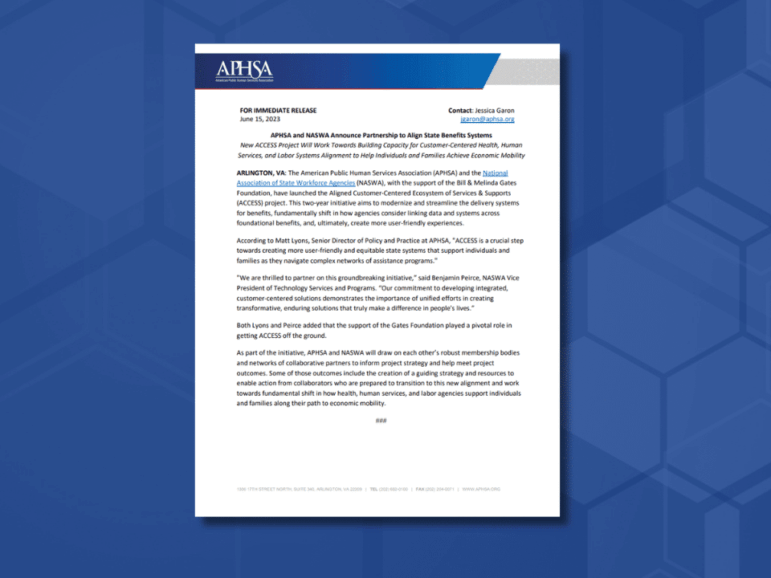
Le Aligned Customer-Centered Ecosystem of Services & Supports (ACCESS) is an initiative led by the American Public Human Services Association (APHSA) in core partnership with the National Association of State Workforce Agencies (NASWA). ACCESS brings together leaders and partners across health, human services, and workforce systems to strengthen how programs, data, and technology work together so individuals and families can navigate benefits and supportive services through a more connected, customer-centered experience.
The initiative combines cross-sector collaboration with the perspectives of people who have lived experience accessing public programs. Through research, resource development, and state-focused implementation support, ACCESS brings a shared vision for modern, integrated service delivery into practical action.
Data SAIL
Le Data & Impact State Action & Innovation Lab (Data SAIL) builds on the foundation established through ACCESS by supporting cross-agency state teams as they develop data-enabled solutions for a more cohesive health, human services, and workforce ecosystem. Teams focus on data and technology barriers that limit coordination across programs, reduce operational efficiency, and create friction for both customers and agency staff.
Cohort Approach
Data SAIL brings together state teams representing multiple parts of the health, human services, and workforce ecosystem. By working across traditional agency and program boundaries, teams can identify shared challenges, develop coordinated strategies, and explore how data and technology can support more cohesive service delivery. Participating teams receive cohort-based peer learning, team-focused technical assistance, and innovation support. Together, these supports help states co-design and advance solutions that reflect their priorities, strengthen cross-agency collaboration, and improve the experience of individuals, families, children, and the agency staff who serve them.

The cohort model also creates opportunities for states to learn from one another, share emerging practices, and apply lessons from peer states to their own operating environments.
Cohort State Projects

Data-Driven Improvements to Kentucky’s Resource Development
Kentucky will strengthen collaboration between its Cabinet for Health and Family Services and its Education and Labor Cabinet by connecting social needs and referral data with education and employment outcomes. Through person-centered data analysis and user experience research, the project is identifying opportunities to improve service delivery, access, and coordination. This work supports better outcomes and well-being for individuals and families across the Commonwealth.

Building Pathways Between Eligibility and Workforce Systems
Nebraska is laying the groundwork for stronger connections between its eligibility and workforce systems, NFOCUS and NEworks. Through workflow mapping, data planning, and engagement with staff and customers, the state is developing user-informed requirements that reduce duplication and improve program coordination. This work prepares Nebraska for future system integration, including the transition of TANF Employment First into NEworks, and help families move toward long-term self-sufficiency.

AI Matchbot
Maryland is developing an AI-enabled MatchBot to improve data matching and support automatic enrollment in the Summer EBT (SUN Bucks) program across participating state agencies. By reducing manual review and matching errors, the solution aims to help eligible families receive benefits accurately and on time while improving program efficiency and customer experience.
*The Data SAIL Request for Proposals closed in September 2025 and the three states above were the selected as the recipients of funds and hands-on assistance to co-design data-enabled solutions that support individuals, families, children, and agency staff. The links below are for historical reference only.
Roadmap to ACCESS: Phase 1
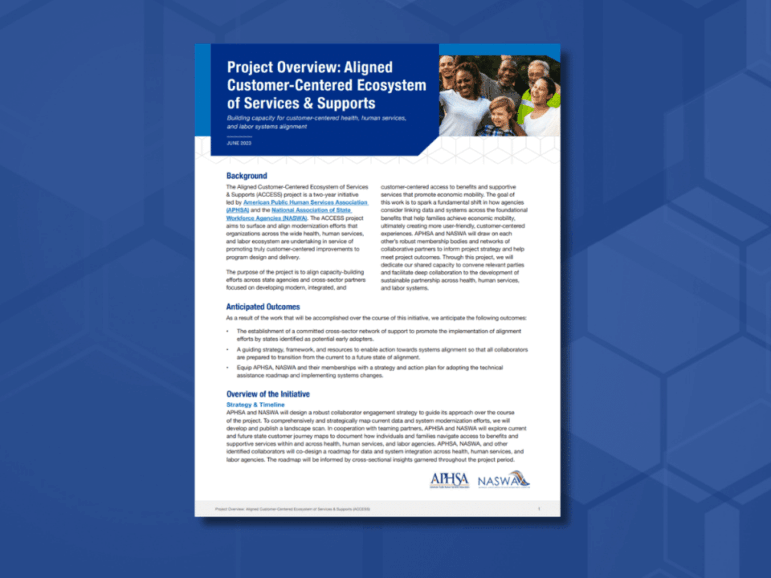
The first phase of ACCESS focused on understanding the current state of benefit access across health, human services, and workforce systems and defining a more aligned future state. APHSA and NASWA engaged state leaders, member networks, peer associations, technical partners, and people with lived experience to identify gaps, opportunities, and actions that can help agencies move toward more coordinated service delivery.
This work produced customer journey maps, customer personas, early insights, and background resources that agencies can use to inform program strategy and modernization efforts. Together, these resources show how people experience today’s systems, what a more connected experience could look like, and where agencies can begin bridging the gap.
Centering Customer Experience
The current- and future-state journey maps were developed in consultation with strategic consultants who have lived experience accessing health, human services, and workforce programs. These perspectives helped ensure that the initiative’s vision for systems alignment reflects the real experiences, needs, and priorities of the people those systems are intended to serve.
ACCESS Phase 1 was also informed by a State Advisory Council of public agency leaders and APHSA’s Community Impact Council. Together, these groups contributed operational expertise, customer perspectives, and guidance to the development of the initiative’s findings and resources.
Ressources
Journey Maps

Current State Journey Map
The Current State Journey Map illustrates how individuals and families navigate benefits and supportive services across health, human services, and workforce systems today. It highlights the different programs, processes, and interactions that can shape a customer’s experience.
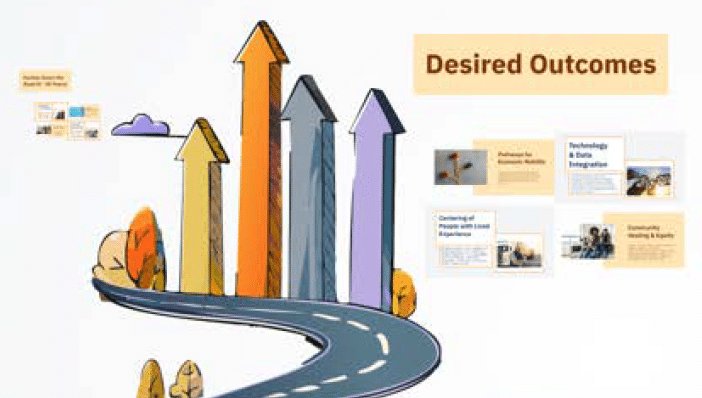
Future State Journey Map
The Future State Journey Map presents a vision for a more coordinated and customer-centered experience. It illustrates how stronger alignment across agencies, programs, data, and systems could make it easier for people to access the services and supports they need.
Customer Insights
Customer Personas
Co-created with members of the Community Impact Council, the ACCESS customer personas illustrate the needs, goals, behaviors, preferences, and challenges of people navigating multiple public programs. Public agencies can use the personas to support program strategy, service design, modernization planning, and customer-centered decision-making.
Reports & Background Resources
Project Partners
ACCESS is supported by an ecosystem of advisors and collaborators representing health, human services, and workforce systems. State agency leaders, people with lived experience, APHSA and NASWA member networks, peer associations, and technical organizations contribute subject matter expertise, help develop and share resources, and connect the initiative to the realities of state implementation. State and field partners have contributed to ACCESS through surveys, interviews, focus groups, advisory activities, and resource development. Their participation helps the initiative identify shared challenges, promising practices, and opportunities for stronger alignment across programs and sectors.
The ACCESS Ecosystem
The ACCESS initiative is led by APHSA in core partnership with NASWA. Data SAIL also draws on the data, workforce, technology, and government modernization expertise of the Coleridge Initiative, the Multi-State Data Collaborative, and U.S. Digital Response.
*On mobile, manually swipe right or left on the tab titles and click the title to view the partner info.
- Association des parents d'élèves de l'Ontario
- NASWA/MSDC
- Coleridge
- U.S. Digital Response
- Community Impact Council
Association américaine des services sociaux publics
APHSA leads ACCESS and Data SAIL, convening state and local human services leaders and partners to develop practical approaches that improve service delivery and advance the well-being of individuals, families, and communities.
National Association of State Workforce Agencies
NASWA represents state workforce agencies across the United States and its territories. NASWA provides policy expertise, shares promising state practices, and promotes innovation and leadership across workforce development systems.
Multi-State Data Collaborative (MSDC)
The Multi-State Data Collaborative brings together state agency program, policy, and data experts to use administrative data to address critical questions and improve programs and practices. It also provides a network through which state teams can exchange ideas, access technical assistance, and collaborate across agencies and state lines.
Coleridge
Coleridge works with governments to improve how administrative data are used for public decision-making. Its work includes supporting secure data linkage and analysis and strengthening the data literacy of public agency staff.
U.S. Digital Response
U.S. Digital Response works alongside governments to strengthen their capacity to meet public needs. The organization connects public agencies with technical expertise to address common and systemic challenges facing government programs and services.

Community Impact Council
The Community Impact Council (CIC) is composed of strategic consultants with lived experience accessing health, human services, and workforce programs. Council members helped establish the foundation of ACCESS, contributed to customer-centered resources, and continue to inform Data SAIL so that the initiative remains grounded in the lived experience of customers.
2026 CIC Members
Abundance Zaddy
David Loaeza (CA)
Essence Gray (IN)
Erinna Hinds (TX)
Keith Lowhorne (AL)
Michelle Denae Garcia (CO)
Queen “Dedria” Johnson (CO)
Sneha Preyer (AZ)
ACCESS Project Staff
Adrian Saldana — Commanditaire du projet
Nana Sasu — Chef de projet
Nicole Acosta — Coordinateur de projet
Christian Monterroso — Responsable du programme
Blake Turpin — Community Collaboration Lead
Marci McCoy-Roth — Commanditaire du projet