

APHSA 2025 Impact Report
Supporting Leaders. Strengthening Systems.
Advancing Community Well-Being.
A Message from the President & CEO

In 2025, human services leaders navigated a year of rapid change—meeting complexity with agility, collaboration, and an unwavering commitment to the people they serve. Throughout it all, APHSA stood alongside our members—helping translate policy into practice, elevating their voices, and providing the tools needed to move forward with confidence.
This report reflects more than what we accomplished—it reflects how we showed up. Together, we responded to major federal shifts, delivered record levels of support and training, and created new opportunities for connection, leadership, and shared learning.
At the same time, we kept our focus on the future. Through efforts like the Community and Social Impact Framework and the expansion of NEICE, we are advancing more connected, equitable, and people-centered systems. These initiatives show what’s possible when innovation is not just an idea, but a pathway to lasting change.
While the numbers in this report are meaningful, the real impact is seen in stronger leadership, more effective services, and better outcomes for children, individuals, and families across the country.
As we look to 2026, we do so with momentum and purpose—committed to supporting our members through change, advancing bipartisan solutions, and strengthening the partnerships that move human services forward.
Thank you for your leadership, collaboration, and trust. Together, we are building a stronger future for the communities we serve.
Sincerely,
Reggie Bicha
President & Chief Executive Officer
American Public Human Services Association
Our Impact at a Glance
2025 brought rapid change for state and local human services leaders. APHSA moved quickly to translate policy into practical implementation support, while continuing to deliver the technical assistance, learning, convening, and space for innovation our members rely on every day.
- Member Support & Leadership
- Policy Translation & Education
- Innovation Scaled to Infrastructure
- Strengthening Human Services

- Engaged over 750 members in APHSA meetings focused on understanding new laws including H.R. 1.
- Delivered more than 1,100 days of customized technical assistance, training, and organizational support—our highest level in 21 years.
- Supported over 2,100 active learners on our THRIVE Learning Management System, including 20 new courses on SNAP and TANF fundamentals, benefit cliffs, leadership skills, and staff well-being.
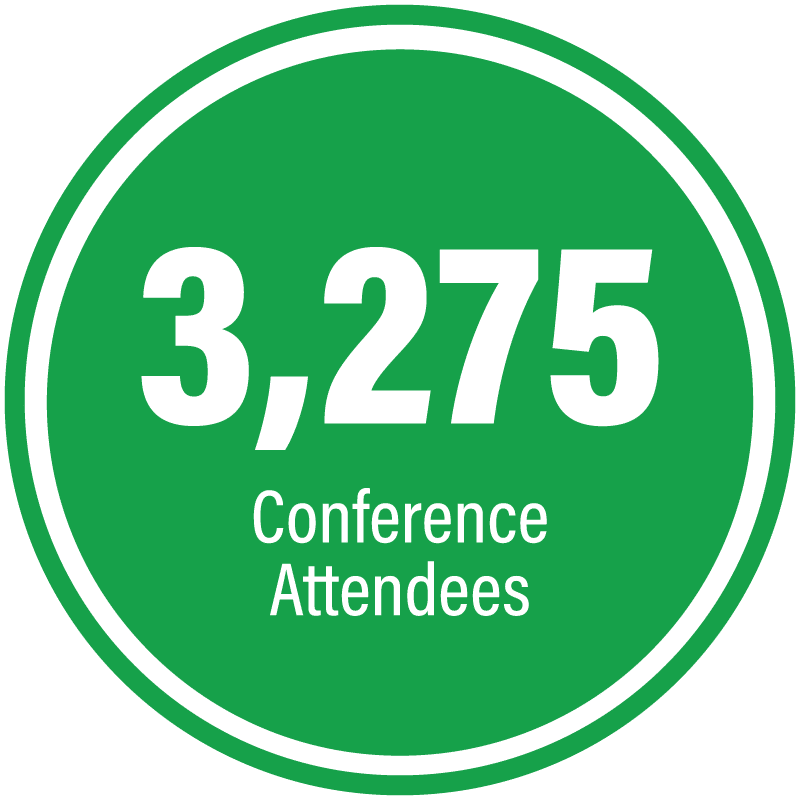
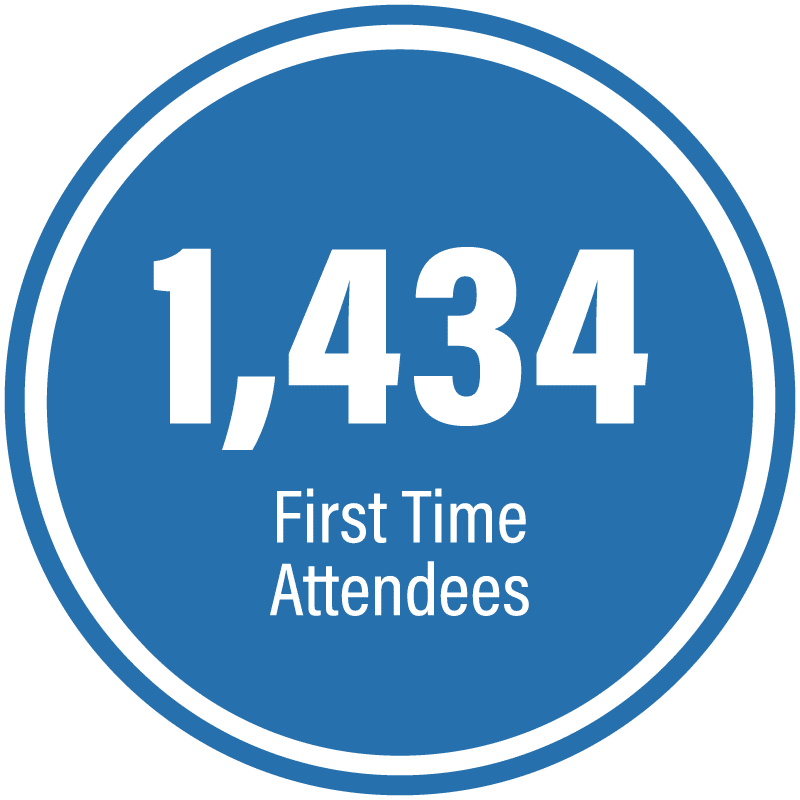
- Welcomed 3,275 attendees across our annual conferences.

- Released a series of Courageous Imperatives for Human Services, providing recommendations to the Administration and Congress to help unlock the full potential of human services.
- Secured nearly $1.2 million in rapid-response grants to support member implementation of major federal changes.
- Delivered 70+ This Week in Washington newsletters and special alerts to keep members informed and prepared.
- Hosted our first-ever Capitol Hill Fly-In, amplifying member voice in national decision-making and briefing more than 130 federal policymakers.

- Launched new Community and Social Impact (CSI) framework focused on building stronger connections between state and local human services agencies and community-led efforts to improve outcomes for children, individuals, and families.
- Expanded the National Electronic Interstate Compact Enterprise (NEICE) data exchange to Michigan, now reaching 47 states, DC, and the U.S. Virgin Islands; serving approximately 30,000 children in 2025 and more than 209,000 since the pilot launched in 2014.
- Concluded Coordinating SNAP and Nutrition Supports (CSNS) Cohort 2 across two states and two counties, resulting in community-driven SNAP process improvements—including Illinois’ first SEBT program, a cross-system food support network in North Carolina, a mobile EBT processing van in San Francisco, and increased food access and SNAP enrollment in Caroline County, MD—while creating a replicable model for rural communities nationwide.
- Secured nearly $3 million to advance member priorities in system modernization and develop, build, and test scalable innovations nationwide.

- Monitored federal policy changes and rapidly developed and disseminated trusted resources to help states and localities navigate uncertainty and operational risk.
- Strengthened leadership and workforce capacity through hands-on academies, coaching, and evidence-based training.
- Advanced innovation by connecting members with resources and partners to improve service delivery and cross-jurisdiction coordination through initiatives like Coordinating SNAP and Nutrition Supports and the national data exchange, NEICE.
- Championed a bipartisan, community-centered framework to expand access, opportunity, and outcomes for individuals and families.
Executive Summary
Rapid Response in a Year of Significant Change
Following major policy changes enacted in May 2025 through budget reconciliation legislation (H.R. 1), APHSA moved quickly to launch implementation-focused working groups engaging more than 750 members. In partnership with national organizations, APHSA developed practical tools and member-only resources, while elevating member voices with federal decision-makers through Congressional briefings and written testimony.
When H.R. 1 passed in July 2025 with sweeping changes to SNAP, Medicaid, TANF, and child care programs, APHSA responded quickly:
- Secured more than $1 million in rapid-response grants from the W.K. Kellogg Foundation, AARP, and New York Health Foundation to support member implementation.
- Developed implementation resources, launched peer communities on payment error and work requirements, and facilitated direct member engagement with federal agencies in partnership with national organizations.
- Engaged more than 750 members in monthly peer communities between September and December.
- Delivered nearly 40 This Week in Washington newsletters and targeted special alerts on budget reconciliation and S-PAYGO to keep members informed and prepared.
- Launched a Benefit Cliff Policy Dashboard to help members navigate emerging federal policy changes.
Day-to-Day Support at Record Levels
In addition, we continued to deliver the core services our Association is known for: technical assistance and training, spaces for connection, and innovation labs that drive improvement across the human services sector. We provided customized technical assistance, launched a National Leadership Academy, trained career navigators in evidence-based practices, and expanded the THRIVE learning platform with courses on benefit cliffs, staff burnout, and leadership skills.
Events That Connect and Inform
In 2025, state and local human services leaders chose APHSA convenings in record numbers to connect with peers. Our National Human Services Summit reached its highest attendance ever, with strong participation across all events and virtual meetings. Members consistently tell us they value not only the resources and information, but also the opportunity for honest conversations about what’s working—and what’s not—with peers and leaders in similar roles.
Turning Innovation Into Infrastructure
APHSA partnered with national organizations to build and scale innovations into lasting infrastructure. The National Electronic Interstate Compact Enterprise (NEICE) continues to support interstate child placements, and this year, in collaboration with the Association of Administrators of the Interstate Compact on the Placement of Children, we launched a new analytics dashboard to help states monitor and improve placement timelines. We also launched our first State Action and Innovation Lab (SAIL), focused on advancing data interoperability across three states and guided by a Community Impact Council with support from technical assistance partners.
Advancing Opportunity Through Change
In 2025, state and local human services leaders worked to serve individuals and families more effectively while navigating a rapidly shifting policy landscape. As these challenges evolved, it became clear that lasting solutions depend on strong community partnerships grounded in shared responsibility and mutual support. In response, APHSA developed and released the Community and Social Impact (CSI) Framework—a structured approach to engaging community voices and strengthening partnerships to address service gaps. Using this framework, five agencies identified priority needs, co-created solutions with stakeholders, and responded proactively to policy changes, ensuring improvements were both impactful and sustainable.
The numbers tell part of the story. But the real impact is harder to quantify: the agency director who felt less alone after a peer community call; the Congressional staffer who better understood SNAP implementation challenges because APHSA explained them clearly; the families who received benefits more seamlessly because their state implemented tools APHSA helped develop; and the child placed safely with a grandparent across state lines in a matter of days because a caseworker had access to the right information at the right time.
As we look ahead to 2026, APHSA will continue working alongside members and partners to modernize human services—driving better program performance and stronger outcomes for children and families nationwide.
Amplifying Member Voices in Washington
APHSA made sure that members and their concerns were elevated to federal decision-makers to inform national policy changes.
Congressional Testimony
House Agriculture Committee:
- Testimony on SNAP State Options (featuring APHSA member alongside APHSA staff and former SNAP participants)
House Ways & Means Committee:
- Briefing on improvements to Chafee Foster Care Program and Education and Training Vouchers
Capitol Hill Presence
Briefed 130+ federal policymakers on critical human services issues through Capitol Hill Fly-ins, educational briefings, and joint convenings with partners.
Federal Comment Letter Submissions
SNAP-related public comments:
- Quality Control 310 Handbook proposed rule
- National SNAP Information Database
- Civil Rights Data Collection Methods regulation Quality control sample
- Quality control sample
AI-related public comments:
- AI Action Plan and Procurement Practices
- Regulatory Reform
- Research & Development Strategic Plan
Improving Child Welfare
- National Collaborative for Transition-Age Youth
- Child Welfare and Immigration Convening
- Accessing Liability Insurance Workgroup
- Comprehensive Child Welfare Information System
- Bipartisan Policy Center Workgroup
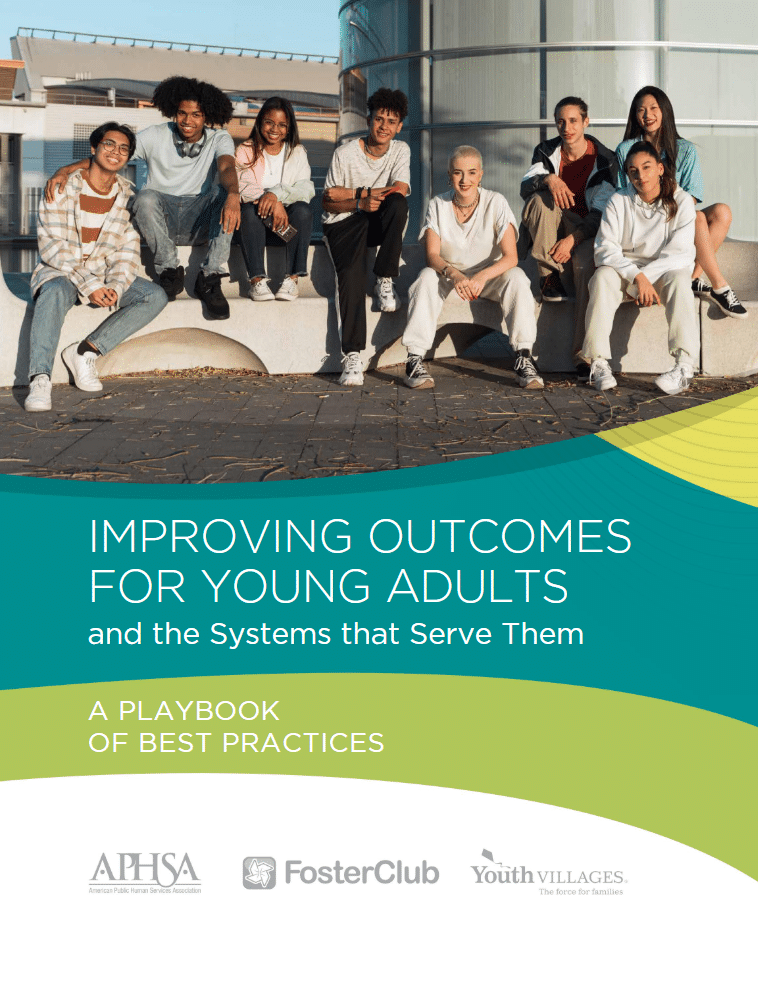
The National Collaborative for Transition-Age Youth, a partnership between APHSA, Youth Villages, and FosterClub, published its first project, Improving Outcomes for Young Adults and the Systems That Serve Them: A Playbook of Best Practices. The playbook was co-designed with young people who have lived experience in foster care and offers a roadmap for child welfare agencies, policymakers, and advocates who are committed to improving outcomes for young people who turn 18 while in foster care.
Supported by the Annie E. Casey Foundation, APHSA convened national, state, and local child welfare leaders for a Child Welfare and Immigration Convening focused on decision-making for children separated from parents due to immigration enforcement. The convening resulted in the development and release of a practical toolkit and decision-support roadmap designed to help child welfare agencies navigate complex jurisdictional, legal, and cross-system challenges while centering child safety, family integrity, and well-being.
APHSA launched the Accessing Liability Insurance Workgroup to address growing barriers to insurance coverage impacting child welfare providers nationwide. Through cross-sector engagement with state leaders, providers, and national partners, the workgroup is developing a comprehensive framework outlining immediate relief options and longer-term policy and administrative reforms, with final recommendations anticipated in early 2026.
At our annual ISM conference, APHSA led a session on Comprehensive Child Welfare Information System (CCWIS) that focused on strengthening data integration, improving system interoperability, and leveraging technology to better support child welfare practice and decision-making. The discussion highlighted emerging opportunities around modernization, governance, and strategic federal-state partnerships to ensure CCWIS investments translate into improved outcomes for children and families.
APHSA contributed to national conversations about child welfare financing and accountability reforms led by the Bipartisan Policy Center. APHSA President and CEO, Reggie Bicha, served on the workgroup which issued a set of recommendations in Charting the Course: A Blueprint for Child Welfare Financing and Accountability Reform.
Member Voices on Capitol Hill
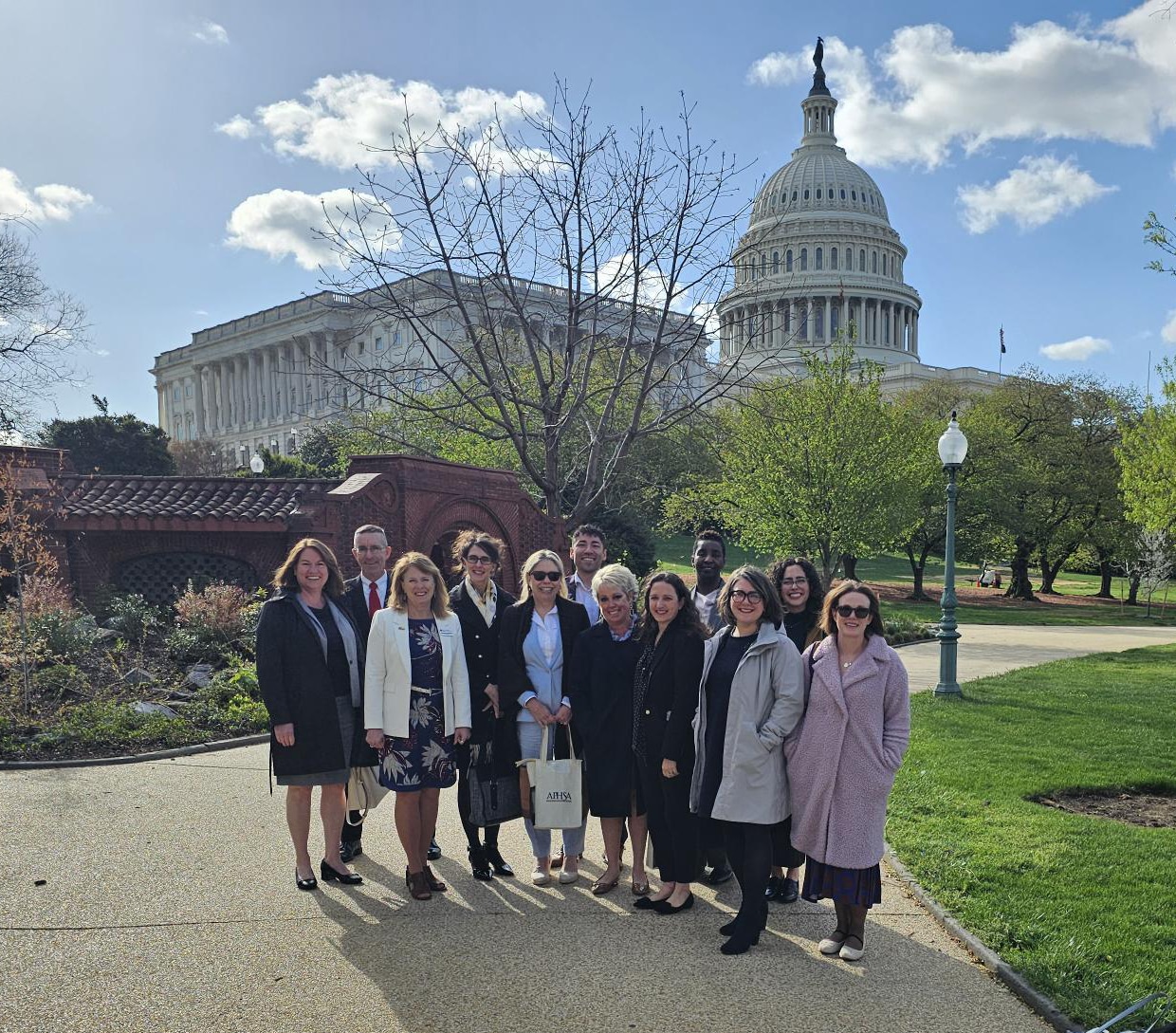
In April, APHSA members from Colorado, Connecticut, Iowa, Nebraska, Oregon, and South Carolina joined APHSA staff on Capitol Hill for a full schedule of meetings with Representatives, Senators, and key committee staff, including Finance, Ways and Means, and Agriculture. These discussions elevated the impact of programs such as SNAP, TANF, SSBG, and Medicaid in their states, while highlighting opportunities to strengthen performance and improve accuracy.
In September, APHSA continued to elevate member voices on Capitol Hill with representatives from Ohio and Wyoming testifying before the House Agriculture Subcommittee on Nutrition and Foreign Agriculture on SNAP state options. The testimony highlighted progress in improving payment accuracy while raising ongoing concerns about the long-term implications of new SNAP policy requirements.
Day-to-day Support for Members at Record Levels
While national engagement is critical, APHSA’s training, analyses, and resources also provided day-to-day support for our members. Our team trained and supported leaders, strengthened agencies’ practices, improved how services are delivered, and partnered with states to overcome interoperability challenges and reduce interstate timelines for permanency for children.
Member Training Support
In 2025, APHSA delivered 1,100+ days of technical assistance, training, and organizational support, the most in our 21 years of operating this service. Launched a National Leadership Academy with a cohort of 25 state and local leaders representing 23 states.
Knowledge Sharing through Online Learning

APHSA’s online learning platform, THRIVE, realized explosive growth in 2025.
Our THRIVE learning platform grew to more than 2,100 active users accessing 20 new courses on topics including SNAP/TANF fundamentals, benefit cliffs, empathy, and staff burnout.
Featured Partnerships

Tennessee Department of Children’s Services
Delivered accelerated state-level Leadership Academy for 30+ child welfare executive leaders and developed customized curriculum addressing agency-specific workforce challenges.

Monroe County Department of Social Services (NY)
Developed and delivered supervisor training utilizing the Next Gen Leadership Competencies. This work was part of a four-year partnership supporting the Executive Leadership team and organization through numerous change strategies and strategic planning efforts.

Mississippi Workforce Hub & Delta Health Alliance
Developed and delivered supervisor training utilizing the Next Gen Leadership Competencies. This work was part of a four-year partnership supporting the Executive Leadership team and organization through numerous change strategies and strategic planning efforts.
“Participating in the National Leadership Academy made me reevaluate how we could better serve our community, our people – by being servant leaders who understand the collaboration, empathy, compassion and accountability are all keystones for leading social services in this current generation.”
County Agency Leader
“I now have a network…to share innovative ideas and really shine outside of the box. I am bringing something to my workplace, my agency and myself.”
State Agency Leader
Driving Better Outcomes Through Research
Our members face complex policy and practice challenges and look to APHSA for thought leadership and actionable insights to inform their day-to-day work. In 2025, APHSA developed evidence-based publications grounded in research and informed by the experiences of state and local leaders.
At our 2025 National Human Services Summit, 12 research teams from across the country shared their work on challenges such as benefits cliffs, Family First implementation, kinship care, income verification, and workforce diversity. This new format gave members direct access to emerging research and practical innovations, along with opportunities to engage with researchers on how to apply these insights in their own agencies.
2025 Publication Spotlights
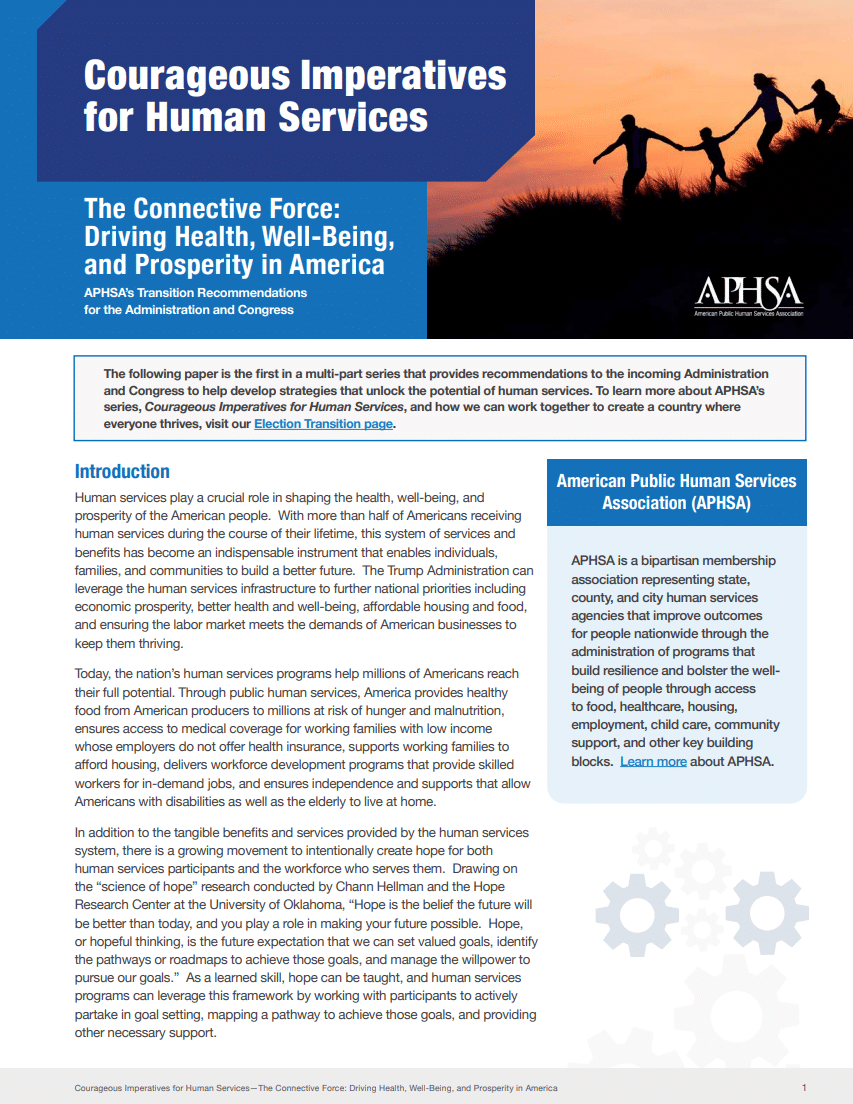
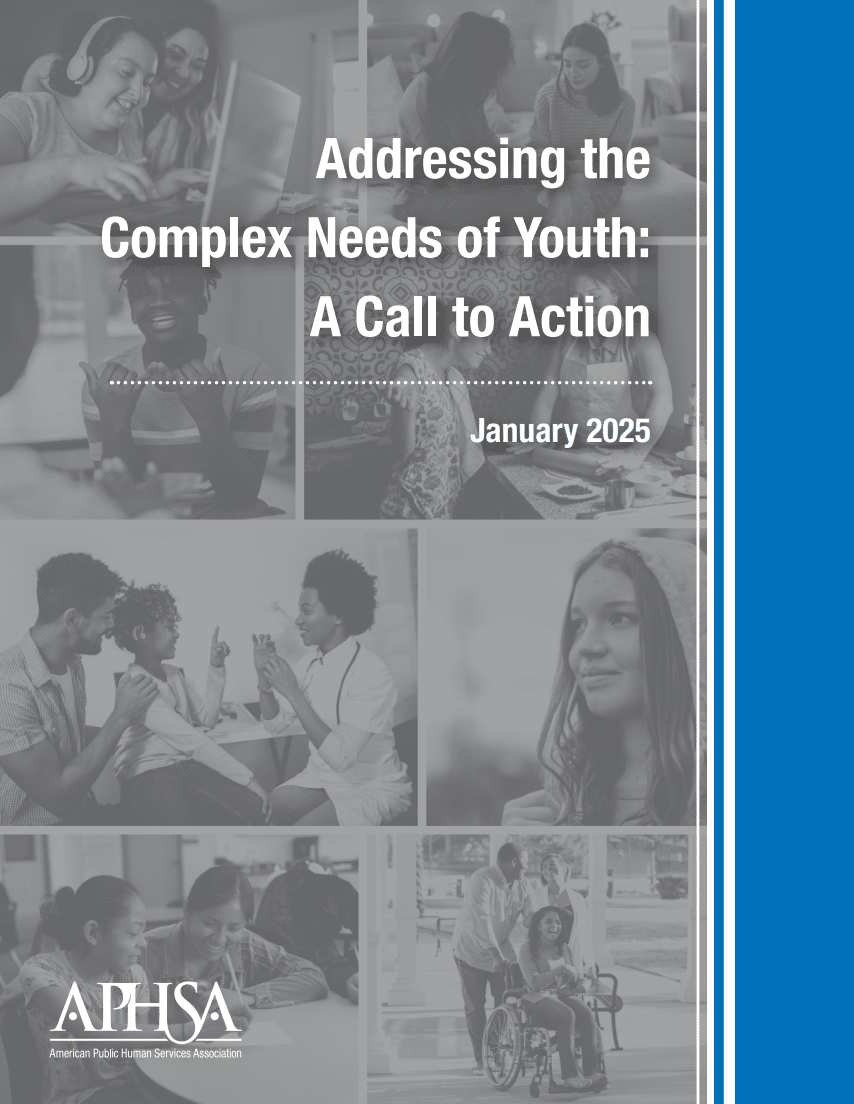
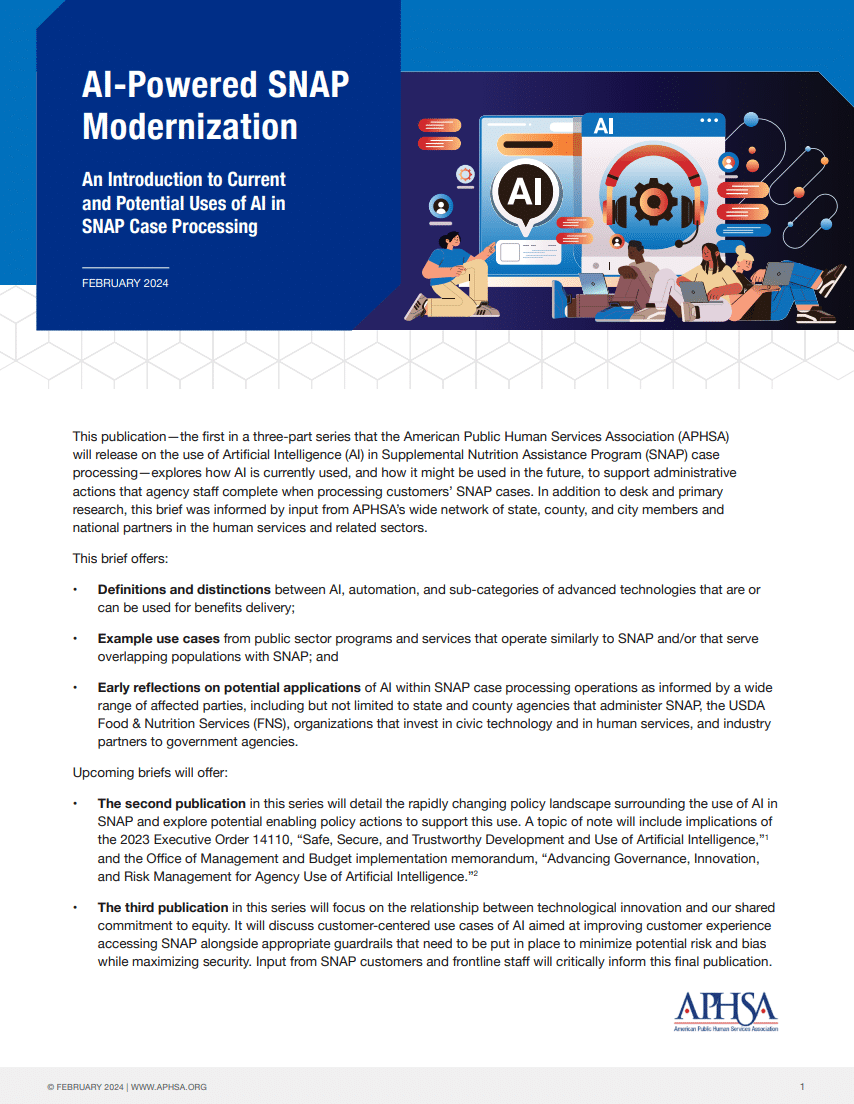
Policy & Practice Magazine
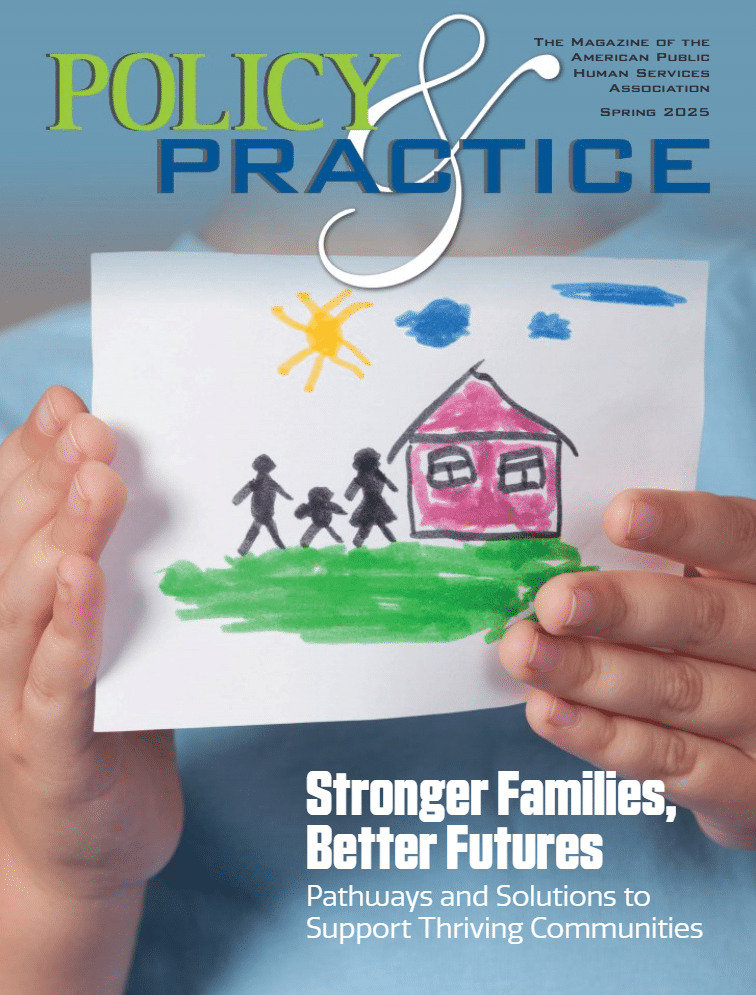
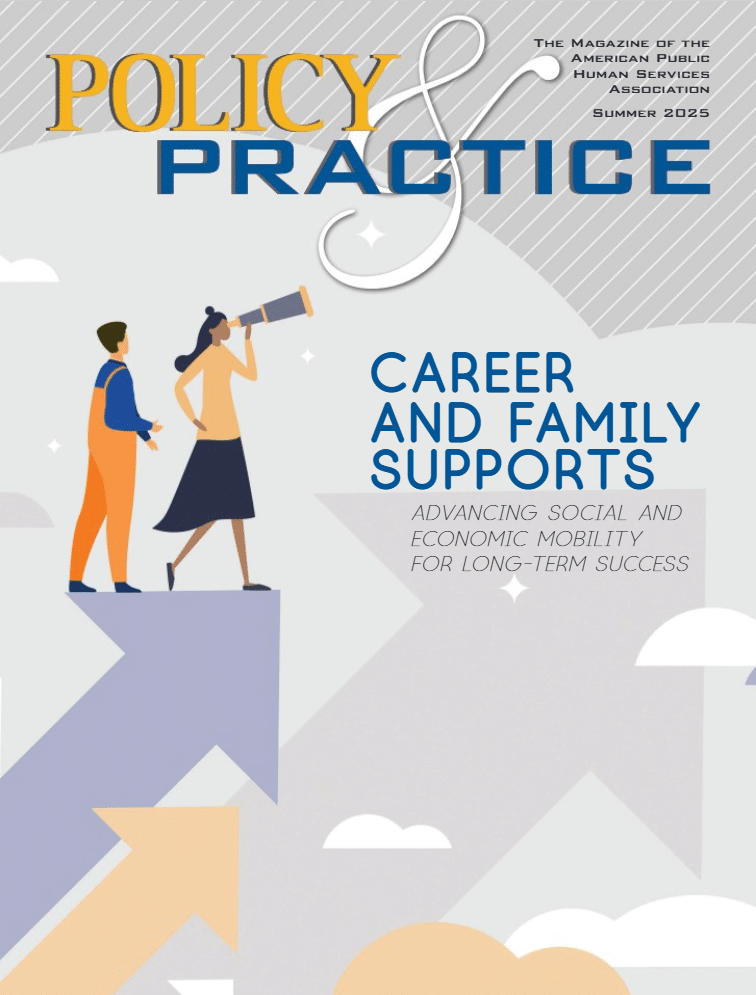
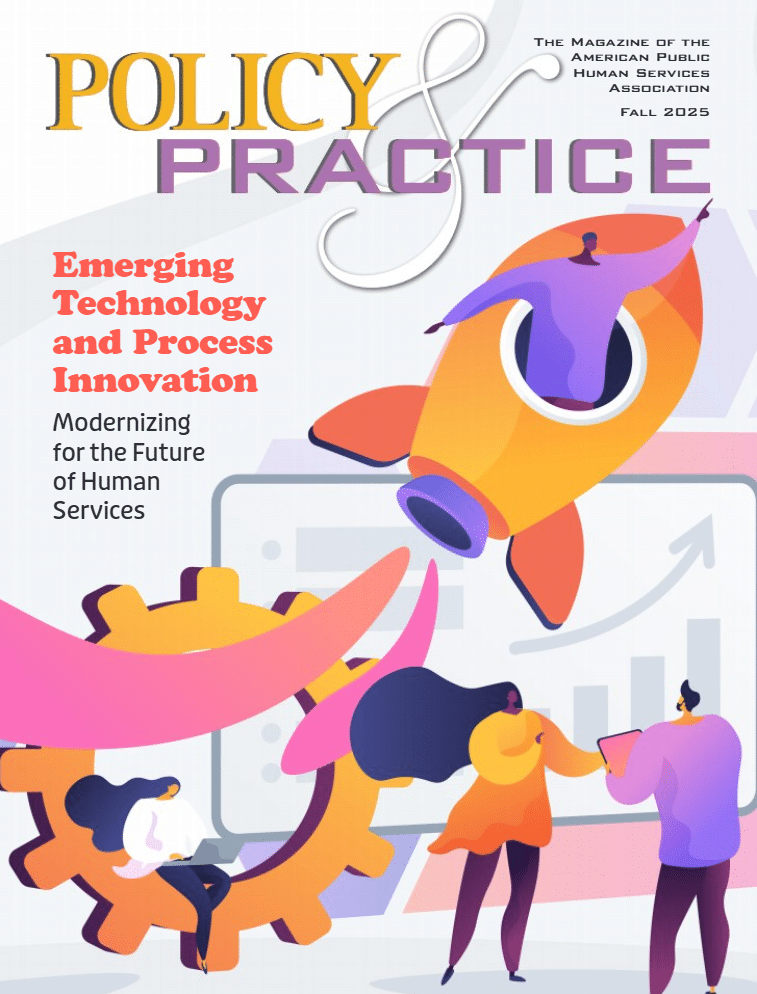
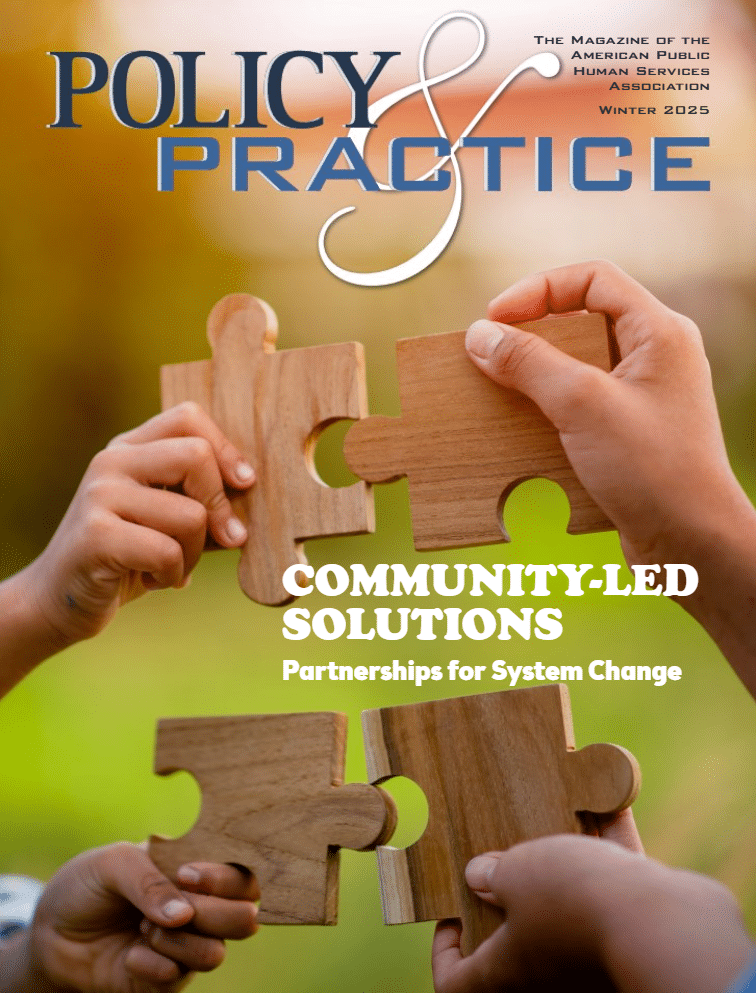
Published four Policy & Practice (P&P) magazine issues on family supports, economic mobility, technology innovation, and community-led solutions.
Member Spotlight: Caroline County, MD
Challenge: Rural food deserts and low SNAP enrollment in underserved communities
Innovation: Bringing food AND enrollment support directly to schools and food deserts—meeting families where they are
Partnership: Coordinating SNAP & Nutrition Supports (APHSA project) in collaboration with Share Our Strength’s No Kid Hungry campaign
Recognition: Featured as innovative approach on NBC’s TODAY Show
Impact: Increased food access and SNAP enrollment in Caroline County, MD, and created a replicable model for rural communities across the US
Events That Connect and Inform
APHSA events provided timely analysis, practical resources, and opportunities for members to connect with peers facing similar challenges and opportunities. Attendance at our 2025 conferences and meetings was strong, with active engagement both in sessions and in informal, peer-to-peer learning environments.
2025 Conference Season Highlights

I always value getting to hear from and interact with the incredibly intelligent and passionate people from across the country who do the same work. This year, I really appreciated the APHSA staff breaking down all of the impending changes to our programs from H.R. 1.
Economic Mobility & Well-Being Conference (EMWB) 2025 Attendee
The breakouts I attended were very meaningful and authentic with plenty of time for discussion and questions. Hearing about the good work happening in states across the political landscape gave me hope!
APHSA National Human Services Summit 2025 Attendee
Annual Conferences
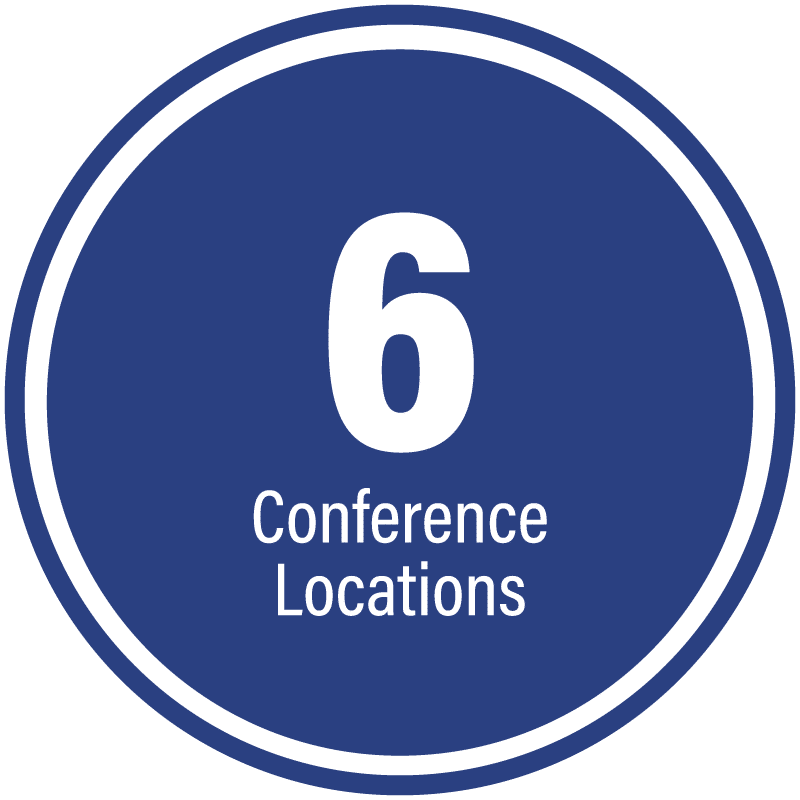
APHSA co-hosted six annual educational conferences with seven of our affinity groups:
- AAICPC Annual Business Meeting & Child Welfare Conference for the Association of Administrators of the Interstate Compact on the Placement of Children (AAICPC)
- APHSA National Human Services Summit
- Economic Mobility and Well-Being (EMWB) Conference for the American Association of SNAP Directors (AASD), National Association of TANF Administrators (NASTA), and the National Association of Program Information and Performance Management (NAPIPM)
- IT Solutions Management for Human Services (ISM) Education Conference & Expo
- National Staff Development and Training Association (NSDTA) Education Conference
- Public Human Services Attorneys (PHSA) Education Conference
Peer Communities
APHSA members convened through dozens of affinity groups, communities of practice, and workgroups.
- Information Systems Management (ISM) Affinity Group: Nearly 100 members on quarterly calls focused on EBT modernization and technology policy
- American Association of SNAP Directors (AASD): Pop-up calls on urgent issues including National SNAP Information Database
- National Association of State Child Care Administrators (NASCCA): Annual business meeting and Early Childhood Policy Round Table with 20 national organizations
- National Staff Development and Training Association (NSDTA): Seven Showcase Series and Learning Exchange webinars with 1350+ participants which focused on workforce well-being, training design, and organizational safety/culture
- H.R. 1 Peer Communities (new in 2025): Two communities launched focusing on payment error rates and work requirements
Strategic Convenings
APHSA hosted strategic meetings with multiple stakeholders, including:
- Child Care Administrator and Advocate Convening: Co-hosted with Center for Law and Social Policy, National Women’s Law Center, and National Indian Child Care Association (20 APHSA members attended)
- Child Welfare and Immigration Convening: Co-hosted with Annie E. Casey Foundation
- Cross-Sector Immigration Enforcement Convening: Co-hosted with the Brookings Institution
- National Summer EBT Convening: Held in conjunction with our annual EMWB Conference
- Procurement Modernization Convening: Co-hosted with US Digital Response at our annual ISM Conference

Turning Innovation into Infrastructure
APHSA’s innovation work creates tools and systems members can use immediately. In 2025, working with our members and civic tech partners, we developed and scaled innovations that strengthen the human services infrastructure.
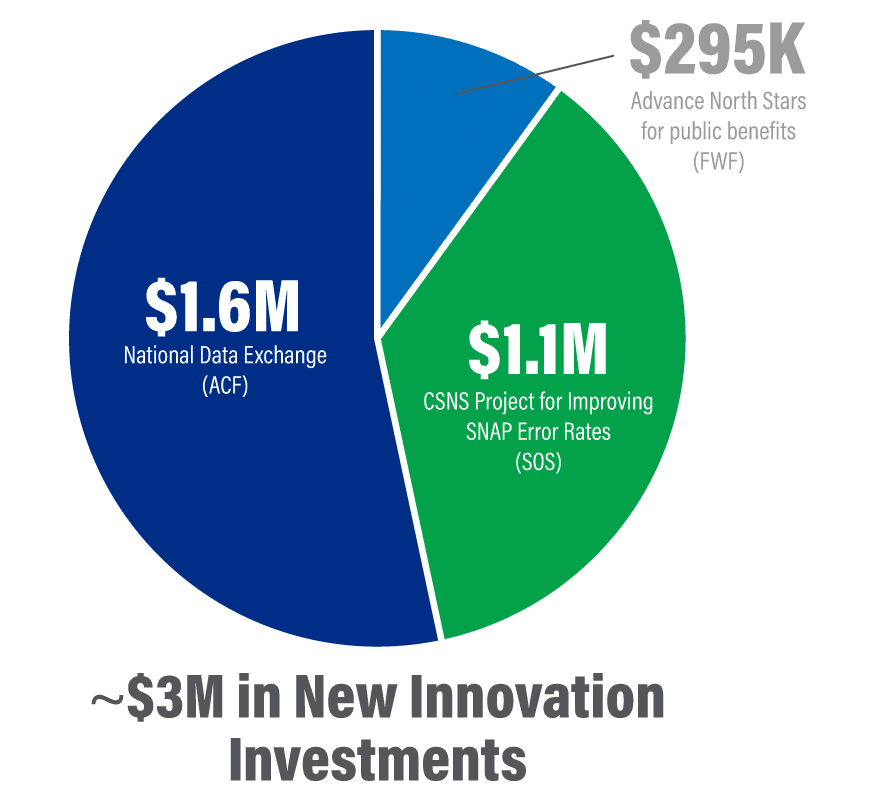
APHSA secured nearly $3 million in NEW innovation investments, including:
- $1.6 million to continue implementation of a national data exchange supporting the placement of children across state lines from the US Department of Health and Human Services, Administration for Children and Families;
- $1.1 million for a Coordinating SNAP and Nutrition Supports project focused on improving SNAP error rates and preserving the SNAP program from Share Our Strength;
- $295K to advance North Stars for public benefits from the Families and Workers Fund

Community and Social Impact Framework
- Established as new strategic focus area
- National landscape and data analysis initiated on disparities across human services
- Innovation Labs held at Summit, EMWB, and NSDTA
- Framework shared with 14 state/local leadership teams
- Cultivated partnerships with the National Council on Aging and Morehouse School of Medicine
“The CSI framework has helped Fairfax County DFS move from vision to measurable action. By centering belonging and focusing on collaboration, CSI strengthens partnerships, removes barriers, and amplifies community voices. Its emphasis on collective impact shifts success from simply counting services delivered to demonstrating meaningful improvements in residents’ lives.”
2026 Fairfax County (VA) Human Services
ACCESS State Action and Innovation Labs (SAILs)
We selected states for our new State Action and Innovation Labs to advance data sharing and cross-program coordination. Key partners include: the Multi-State Data Collaborative and the National Association of State Workforce Agencies (NASWA).
People with Lived Experience (PWLE) Integration
Co-created at least 15 events and meetings and launched a professional development series.
Modernizing Systems, Connecting States

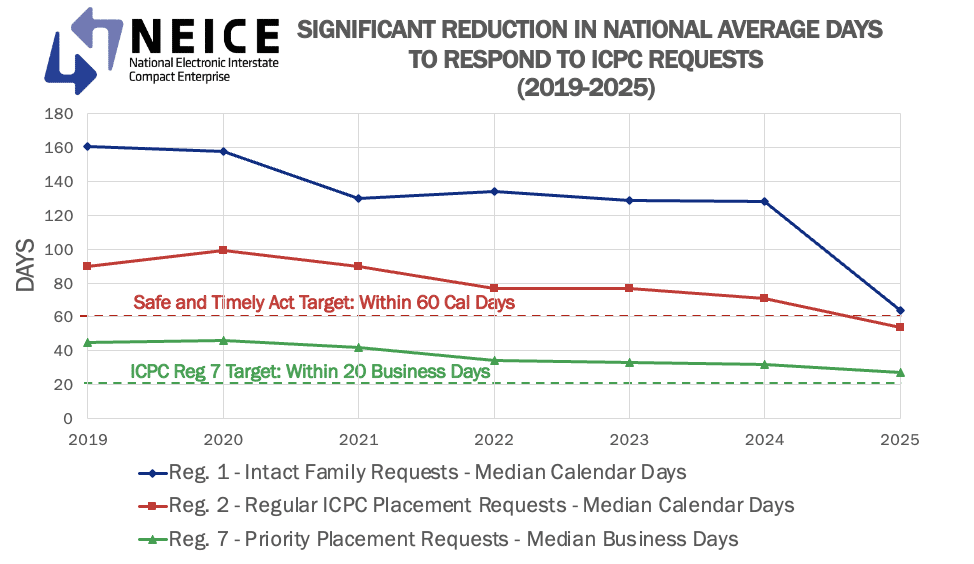
When a child needs an interstate placement, any delay matters. The National Electronic Interstate Compact Enterprise (NEICE), developed and managed by APHSA and the AAICPC,[i] provides an information and document highway for 47 states, the US Virgin Islands, and DC which use the system to process requests for interstate placements of children. APHSA received an additional one-year grant from the Children’s Bureau in October 2025 to continue developing and maintaining the NEICE.
- By using NEICE, states have significantly reduced wait times for children and families by as much as 40%.
- NEICE served nearly 30,000 children in 2025, and more than 209,000 children since its launch as a pilot in 2014.
- APHSA and AAICPC released a new national analytics dashboard in 2025 which states can now use to track their own timelines for placing children and compare their data over time. The dashboard also allows states to monitor their timeline averages in comparison with national averages.
National Leadership Through Strategic Partnerships
APHSA’s impact extends through partnerships across sectors. We collaborate with national policy organizations, technology and innovation partners, and convened nine-member affinity groups serving child welfare, SNAP, child care, TANF, IT, training, and legal professionals nationwide.
2025 Funding Partners



Strategic Industry Partners
DIAMOND





PLATINUM








SILVER











National and International Partners

APHSA Affinity Groups





Spotlight: Fairfax County DFS Advances Access & Opportunity

Fairfax County (VA) Department of Family Services (DFS) is leveraging the APHSA Community and Social Impact framework to drive access, innovation, and belonging across the community. By removing barriers, building trust, and elevating resident voices, DFS is translating policy changes such as SNAP updates into meaningful, community-centered action. Through strong partnerships, data-informed strategies, and workforce development, DFS is strengthening services while modeling how leaders can address root causes and achieve sustainable impact.
Organizational Strength & Financial Health
Strong member service requires strong internal operations. This past year, APHSA invested in our people, communications, and financial health.
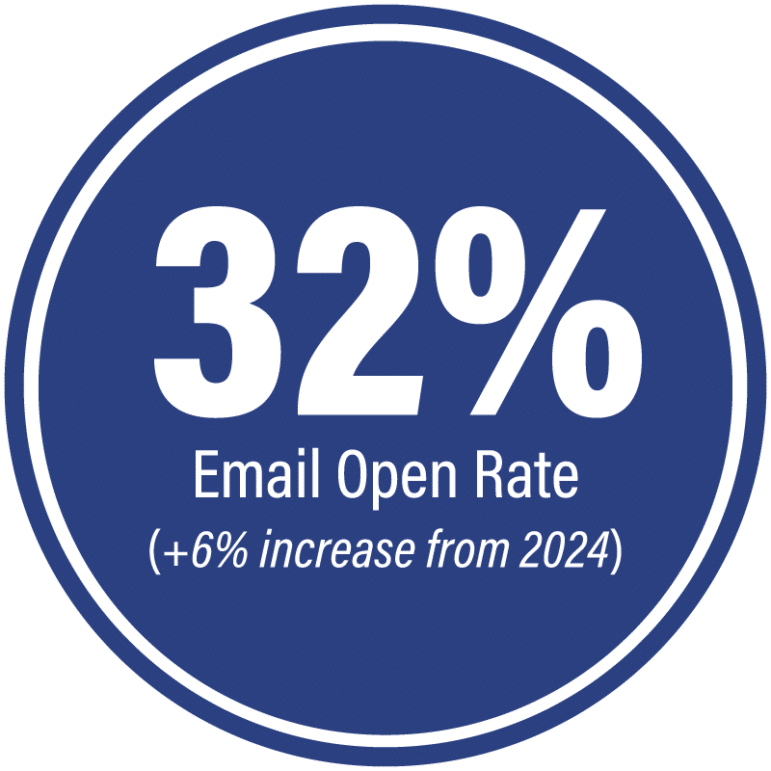
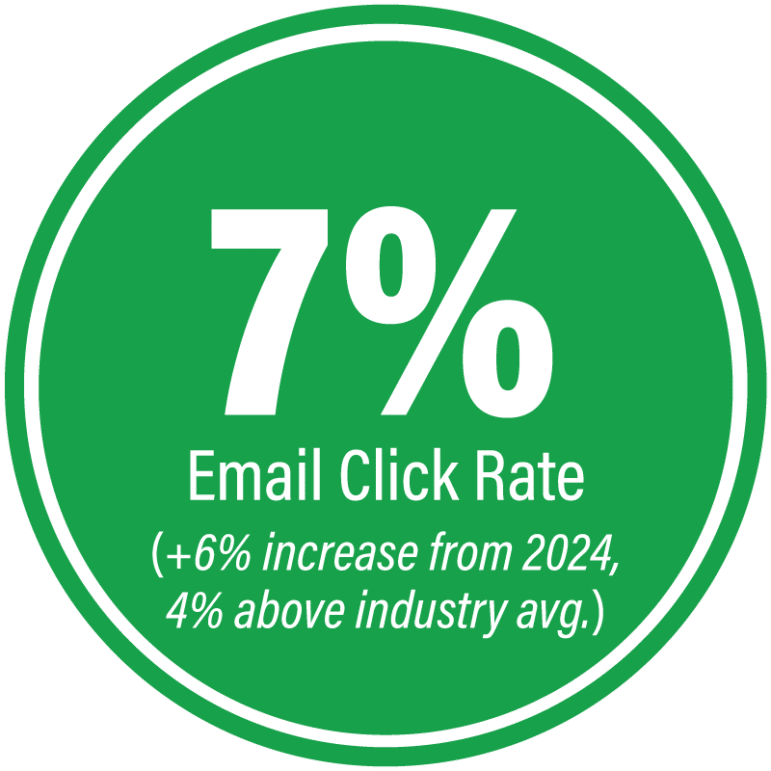
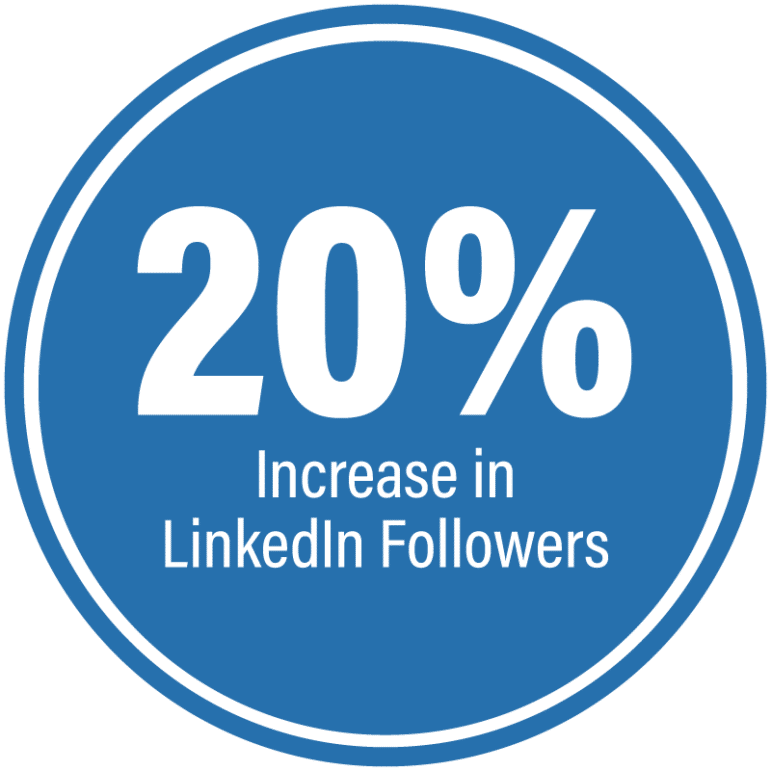
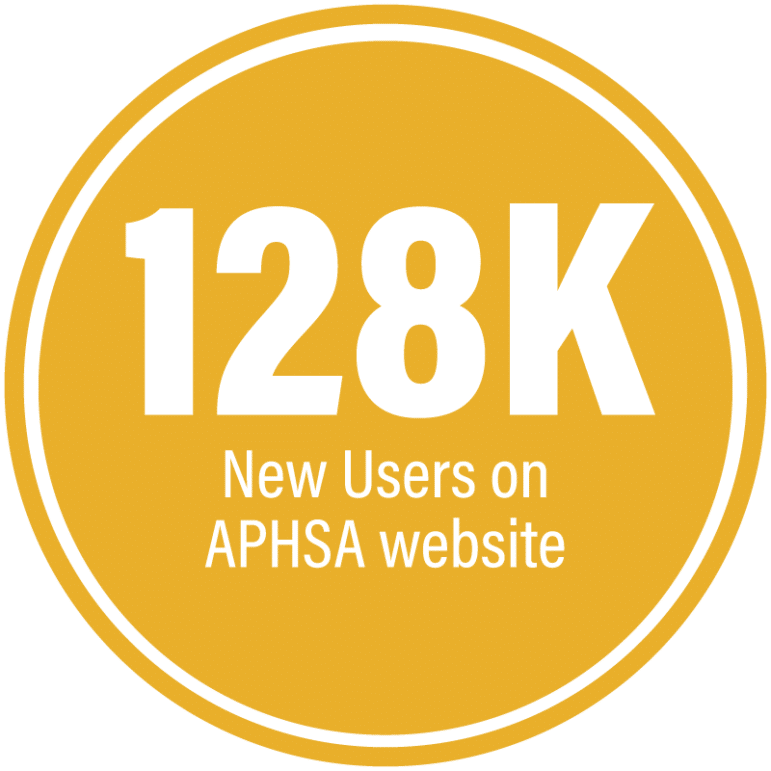
Communications Growth
Fiscal Highlight
Completed 2024 fiscal audit on schedule with no findings (April 2025)
Looking Ahead: Momentum Building Into 2026
The work we began in 2025 positions APHSA to serve members even more effectively this year. With stronger infrastructure, expanded partnerships, and proven capacity to respond in crisis, we enter 2026 ready to support members through continued change. Several major initiatives will launch in early 2026:
- Multi-State Cohort for Open-Source AI Implementation & Scaling will launch in early 2026 to develop tools for streamlining SNAP and Medicaid work verification.
- Coordinating SNAP & Nutrition Supports plans to launch its third cohort in 2026 to enable community-driven process innovation in the delivery of food security resources.
- Data SAIL launches in 2026 out of the ACCESS initiative, equipping multi-agency state teams with tools to advance data alignment strategies across health, human services, and labor.
- Community and Social Impact framework will expand through learning labs and cross-sector dialogues centering community voice.
- NEICE continues to provide targeted support for the five remaining states to meet the October 2027 universal implementation deadline.
- Dedicated H.R. 1 funding continues through 2026 to support peer communities and provide implementation guidance.
Special Thanks
None of this work would be possible without:
- Our Members who continue to trust APHSA as their partner in advancing human services excellence
- Our Strategic Partners and Funders who share our commitment to strengthening systems and improving outcomes
- Our Affinity Group Participants who actively engage in peer-to-peer sharing and advise on state and national policy implementation
- Our Board of Directors whose leadership and vision guide our work
- Our Dedicated Staff who bring expertise, commitment, and heart to supporting the human services field every day
Thank you for being part of the APHSA community.
Together, we are making a difference in the lives of tens of millions every day.
Reggie Bicha
President & Chief Executive Officer

Marci McCoy-Roth
Chief Impact & Innovation Officer
i Disclaimer: NEICE is operated by the American Public Human Services Association (APHSA) as secretariat to the Association of Administrators of the Interstate Compact on the Placement of Children (AAICPC) and is made possible by grant number 90XA0151 from the Children’s Bureau. The contents of this report do not necessarily reflect the views or policies of the funder, nor does mention of trade names, commercial products or organizations imply endorsement by the U.S. Department of Health and Human Services. This information is in the public domain. The project is also funded by state licensing fees paid by participating jurisdictions.