
Written By: Kyle Lei, San Francisco Human Services Agency
The Coordinating SNAP and Nutrition Supports (CSNS) program strengthens access to human services by aligning the Supplemental Nutrition Assistance Program (SNAP) with other nutrition supports. CSNS also works to center individuals with lived experience by giving them a voice through the Community Impact Council (CIC), which guides the funding of innovative projects. The blog post below is part of a series from APHSA that will share insights and stories from each team involved, highlighting the program’s impact on service delivery and community engagement.
I thought I had a pretty good handle on community engagement. I understood how to conduct outreach, gather feedback, and connect with community-based organizations to determine how we can best assist them. But going through the Coordinating SNAP and Nutrition Supports (CSNS) Cohort 2 helped me slow down and really look at how we design services and who we’re designing them with.
That shift has had a significant influence on how I approached one of the San Francisco Human Services Agency (SFHSA) projects: the Mobile Benefits Center.
Approaching Food Security from a Different Perspective
The Mobile Benefits Center was built on a simple idea—bringing human services directly to communities that face barriers getting to our buildings. In other words, meeting people where they are, literally. Building something mobile, useful, and community-centered, however, was far from simple.

CSNS created a safe space for cohort members to share ideas, strengths, and challenges with one another—some of which we’ve applied to the Mobile Benefits Center. Each cohort member brought a different lens, as we all come from different counties, states and organizations.
An example of an idea we shared with the cohort was allocating some project funding to hire a consultant to help co-design the Mobile Benefits Center program using the voices of people with lived experience. It’s not just about transportation or logistics, it’s about dignity, trust, and access. And most importantly, it’s about designing with the people we hope to serve.
One of the most impactful lessons I took from CSNS was learning to approach both challenges and successes with curiosity and an open mind. From the beginning, we engaged directly with clients of different ages, experiences, and backgrounds, as well as with frontline staff and community partners.
Human Services Delivery Grounded in Community Connections
A story that really stuck with me came from our partnership with the HYPE Center, where SFHSA and the San Francisco-Marin Food Bank (SFMFB), hosted a pop-up event to pilot the services of the Mobile Benefits Center. The HYPE Center is a community-based organization that supports transitional age youth (TAY), ages 14 to 24.
During the pop-up event, a youth shared with a HYPE staff member how relieved and happy they were to get approved for continuous Medi-Cal and CalFresh on the spot. They were worried their benefits would stop, but after speaking with a SFHSA Eligibility Worker, they learned it was just an error. When they found out everything was okay, they jumped for joy in front of the HYPE staff.
What hit home for me was that this moment happened in a space where the youth already felt safe and supported. As someone who experienced instability in my youth, I know how important it is to feel seen, heard, and secure. This is especially true when you’re trying to get help.
The Value of Staying the Course
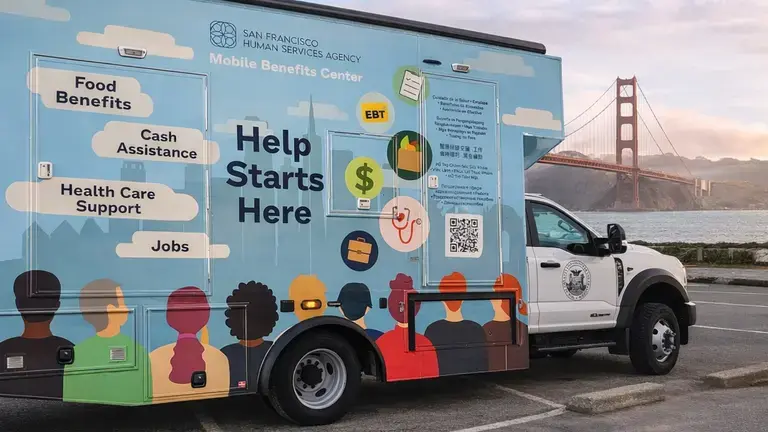
Through CSNS, I also learned the value of iteration. The Mobile Benefits Center isn’t a one-and-done solution—it’s something we’re going to learn from, adjust, and grow over time. I don’t feel like I need to have all the answers up front anymore. It’s more important to stay curious, stay connected, and be open to change.
Reflecting on this experience, I’ve come to see that true community engagement isn’t just about showing up, it’s about showing up differently. CSNS challenged me to think more deeply about equity, belonging, and partnership.
The Mobile Benefits Center is still a work in progress, but it’s being shaped by the voices of those who use it, not just those who build it. That’s the biggest lesson I’ve taken with me: designing with, not for. And moving forward, I’ll carry that approach into everything I do—centering dignity, listening first, and building trust one conversation at a time.
About the Author
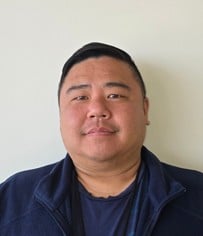
Kyle Lei
Program Specialist, Community Engagement Unit
San Francisco Human Services Agency
Kyle Lei is a Program Specialist in the Community Engagement unit at the San Francisco Human Services Agency (SFHSA), where he has served for over 10 years. He began his career as an Eligibility Worker, specializing in Medi-Cal and CalFresh, before transitioning into his current role.
In his work today, Kyle supports outreach operations, coordinates community partnerships, and develops tools such as dashboards to track impact and improve service delivery. He is passionate about increasing access to essential services and enhancing the client experience through data-informed strategies and collaborative engagement. Kyle also leads the development and implementation of SFHSA’s Mobile Benefits Center that launched in early 2026.