
Écrit par : Kyle Lei, Agence des services sociaux de San Francisco

Le Coordination du SNAP et des soutiens nutritionnels (CSNS) Ce programme renforce l'accès aux services sociaux en harmonisant le Programme d'aide alimentaire supplémentaire (SNAP) avec d'autres aides nutritionnelles. Le CSNS s'attache également à placer les personnes concernées au cœur du dispositif en leur donnant la parole par le biais du Conseil d'impact communautaire (CIC), qui oriente le financement de projets innovants. L'article de blog ci-dessous fait partie d'une série de l'APHSA qui partagera les témoignages et les expériences de chaque équipe impliquée, mettant en lumière l'impact du programme sur la prestation de services et l'engagement communautaire.
Je pensais bien maîtriser l'engagement communautaire. Je savais comment mener des actions de sensibilisation, recueillir des commentaires et nouer des liens avec les organismes communautaires afin de déterminer comment les aider au mieux. Mais en parcourant le Coordination du SNAP et des soutiens nutritionnels (CSNS) La deuxième promotion m'a aidé à ralentir et vraiment Découvrez comment nous concevons nos services et avec qui nous les concevons.
Ce changement a eu une influence significative sur la manière dont j'ai abordé l'un des Agence des services sociaux de San Francisco Projets (SFHSA) : le Centre mobile des prestations.
Aborder la sécurité alimentaire sous un angle différent
Le Centre mobile d'aide sociale repose sur une idée simple : apporter les services sociaux directement aux communautés qui rencontrent des difficultés d'accès à nos locaux. Autrement dit, aller à la rencontre des gens là où ils se trouvent, littéralement. Concevoir un dispositif mobile, utile et axé sur la communauté s'est toutefois avéré loin d'être simple.

CSNS a créé un espace sûr permettant aux membres de la cohorte de partager leurs idées, leurs atouts et leurs difficultés ; certaines de ces idées ont été mises en pratique au sein du Mobile Benefits Center. Chaque membre a apporté une perspective différente, car nous venons tous de comtés, d'États et d'organisations différents.
Un exemple d'idée partagée avec le groupe consistait à allouer une partie du budget du projet au recrutement d'un consultant pour co-concevoir le programme des Centres mobiles d'aide aux bénéficiaires, en tenant compte des témoignages de personnes concernées. Il ne s'agit pas seulement de transport ou de logistique, mais aussi de dignité, de confiance et d'accessibilité. Et surtout, il s'agit de concevoir… avec les personnes que nous espérons servir.
L'un des enseignements les plus marquants que j'ai tirés de mon expérience au CSNS a été d'apprendre à aborder les défis comme les réussites avec curiosité et ouverture d'esprit. Dès le départ, nous avons été en contact direct avec des clients d'âges, d'expériences et de milieux différents, ainsi qu'avec le personnel de première ligne et les partenaires communautaires.
Prestation de services sociaux ancrée dans les liens communautaires
Une histoire qui m'a particulièrement marquée est celle de notre partenariat avec le HYPE Center. La SFHSA et la Banque alimentaire de San Francisco-Marin (SFMFB) y ont organisé un événement éphémère pour tester les services du Centre mobile d'aide sociale. Le HYPE Center est une organisation communautaire qui soutient les jeunes en transition (14 à 24 ans).
Lors de cet événement ponctuel, un jeune a confié à un membre de l'équipe HYPE son soulagement et sa joie d'avoir obtenu sur-le-champ l'approbation pour le maintien de ses prestations Medi-Cal et CalFresh. Il craignait que ses aides ne soient interrompues, mais après avoir parlé avec un agent d'admissibilité du SFHSA, il a appris qu'il s'agissait d'une simple erreur. Lorsqu'il a su que tout était rentré dans l'ordre, il a laissé éclater sa joie devant l'équipe HYPE.
Ce qui m'a particulièrement touchée, c'est que ce moment se soit déroulé dans un lieu où les jeunes se sentaient déjà en sécurité et soutenus. Ayant moi-même connu l'instabilité durant ma jeunesse, je sais combien il est important de se sentir écouté, compris et en sécurité. C'est d'autant plus vrai lorsqu'on cherche de l'aide.
L'importance de maintenir le cap
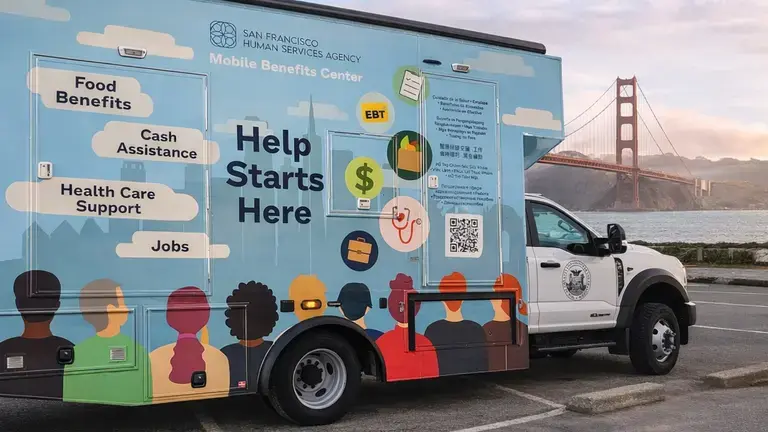
Grâce à CSNS, j'ai aussi compris l'importance de l'itération. Le Centre des avantages mobiles n'est pas une solution miracle ; c'est un projet dont nous allons tirer des enseignements, que nous allons adapter et développer au fil du temps. Je n'ai plus besoin d'avoir toutes les réponses d'emblée. Il est plus important de rester curieux, de maintenir le contact et d'être ouvert au changement.
En repensant à cette expérience, j'ai compris que le véritable engagement communautaire ne se limite pas à la simple présence, mais consiste à s'y impliquer autrement. CSNS m'a incitée à approfondir ma réflexion sur l'équité, l'appartenance et le partenariat.
Le Centre mobile des avantages sociaux est encore en développement, mais il est façonné par les retours de ses utilisateurs, et pas seulement par ceux de ses concepteurs. C'est la principale leçon que j'en ai tirée : concevoir… avec, pas pour. Et désormais, j'appliquerai cette approche à tout ce que je ferai : placer la dignité au centre de mes préoccupations, écouter d'abord et instaurer la confiance une conversation à la fois.
À propos de l'auteur
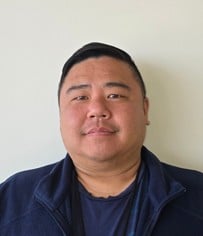
Kyle Lei
Spécialiste de programme, Unité d'engagement communautaire
Agence des services sociaux de San Francisco
Kyle Lei est spécialiste de programme au sein de l'unité d'engagement communautaire de l'Agence des services sociaux de San Francisco (SFHSA), où il travaille depuis plus de 10 ans. Il a débuté sa carrière comme agent d'admissibilité, spécialisé dans les programmes Medi-Cal et CalFresh, avant d'occuper son poste actuel.
Dans le cadre de ses fonctions actuelles, Kyle soutient les actions de proximité, coordonne les partenariats communautaires et développe des outils tels que des tableaux de bord pour mesurer l'impact et améliorer la prestation de services. Il est passionné par l'amélioration de l'accès aux services essentiels et l'optimisation de l'expérience client grâce à des stratégies fondées sur les données et à une approche collaborative. Kyle dirige également le développement et la mise en œuvre du Centre mobile des prestations de SFHSA, lancé début 2026.